Wednesday, 4 October 2017

CONFIRMATION 2017

                                                                          KORA
                                                                       O'SHEA

                                                                        VARNA


KIDS VOTING 2017
We took place in the NZ Kids Voting programme. We looked at all parties policies for education and choose the ones we liked the best. We decided who we would vote for and had a vote like a real election on 19th September. 
http://www.elections.org.nz/resources-learning/school-resources/kids-voting-programme


      Looking at the education policies from all the major parties to help us decide who to vote for.


paper4trees


PAPER 4 TREES
We planted the 5 trees we got for recycling paper and cardboard for 2016-2017


Global Connections.


                            Penpal letters heading to Ireland to St Josephs CBS in Drogheda.

Schools Peace Week 2017


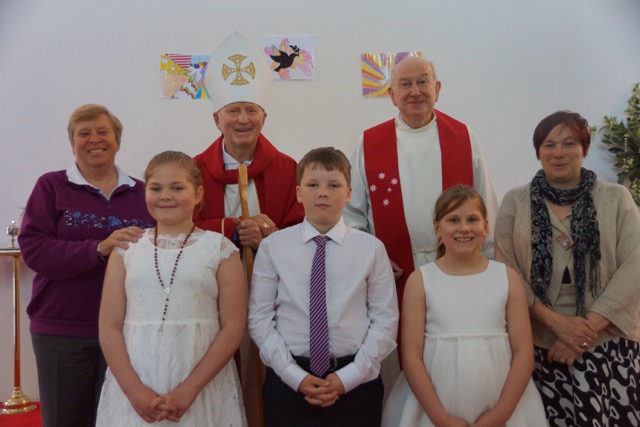
Wati on his Confirmation with Bishop Colin.


SCHOOLS PEACE WEEK 2017.


 Riley and Ayla dressed  up as hippies for our Peaceful protest about Nuclear bombs being banned.
                          Kanon dressed as a hippy for the peaceful protest as part of schools peace week.

                                                             MATHS WEEK 2017


Wednesday, 26 July 2017

“Nothing else will change the world but people who fight for justice and human dignity. Following Jesus demands a good dose of courage, a readiness to trade in the sofa for a pair of walking shoes…” POPE FRANCIS Politics is never far from conversations in family homes and with colleagues at work. Our fast approaching election this September comes against a backdrop of a rapidly changing world. Once we divided the world into democracies and dictatorships. Today that neat division no longer exists. Terrorism, cronyism, corruption, fake news, WikiLeaks and the galloping gap between the rich and the poor all undermine people’s faith in politics and traditional political parties. Brothers and Sisters in Christ, these observations are just part of a heartfelt korero we had as brothers in faith around our Bishops’ table. We know your homes and hostels and flats too will resonate with vision and political talk as the coming months unfold. We urge you all to pray about, reflect on, discuss and debate what kind of society New Zealand can be in the eyes of God. Faith has a vital role in the public forum. Stand up, uphold the common good of our nation, choose wisely, and your vote will be a blessing for our nation. Bishop Patrick Dunn Bishop of Auckland President, NZCBC Cardinal John Dew Cardinal Archbishop of Wellington Vice-President, NZCBC Bishop Charles Drennan Bishop of Palmerston North Secretary, NZCBC New Zealand Cathloic Bishops Conference Te Huinga o ngā Pīhopa Katorika o Aoteroa PO Box 1937, Wellington 6140 FAIR TAX STRUCTURE We appreciate the work ethic of so many of our fellow citizens. We desire a tax structure that is fair to low income earners and respects the contributions of all workers to our society. In a globalised economy we recognise New Zealand has much to offer in the upholding of sound business and investment ethics. MENTAL HEALTH The wellbeing of all New Zealanders is of concern to everyone. Mental health services and facilities are a telling measure of a society’s attitude to its vulnerable. Years of inadequate funding is resulting in much stress and angst in families, and our suicide rates bring shame upon us as a nation. We advocate a thorough review and strengthening of the mental health sector as part of an integrated health system. AFFORDABLE HOUSING We support efforts to bring about affordable housing. Excessive rents and inflated house prices are leaving families homeless and young couples despondent. Without effective policies to support regional and provincial economic development and consequent employment we miss opportunities to alleviate this problem, which is worst in our biggest cities. PRISON POPULATION We are deeply disturbed by the growing prison population in New Zealand. It is a national disgrace. Crime rates have in fact fallen in New Zealand. What is driving the increase in prison numbers is changes to bail law, sentencing and parole. We want our communities to be safe. We want deterrents to be positive. Pathways of care and guidance, of participation and belonging, of work and purpose are what our at-risk young need, not corridors of bars and negative mentors. Bishop Colin Campbell Bishop of Dunedin Bishop Steve Lowe Bishop of Hamilton Fr Rick Loughnan Diocesan Administrator Christchurch Diocese Ki ō tātou tuākana, tēina i roto i te whakapono, ā, ki ō tātou hoa kirirarau o Aotearoa Step out and Vote The New Zealand Catholic Bishops’ 2017 Election Statement

Politics is never far from conversations in family homes and with colleagues at work. Our fast approaching election this September comes against a backdrop of a rapidly changing world. Once we divided the world into democracies and dictatorships. Today that neat division no longer exists. Terrorism, cronyism, corruption, fake news, WikiLeaks and the galloping gap between the rich and the poor all undermine people’s faith in politics and traditional political parties.

How can we make a difference? Expectations, aspirations and a desire to help shape our community all stir within us the duty to exercise our democratic right and vote. In every election there are those who vote for the first time in their life. Together with all of us, you face a complex and precious decision. Faith shapes our world view. Faith guides our political choices. Faith demands that we take the duty to vote very seriously. Your vote is not just a vote for you. Your vote is a vote for New Zealand. This means that we expect of our politicians and our political parties a vision for the home we call Aotearoa. Indeed, in scripture we read “where there is no vision the people perish” (Proverbs 29:18). As Bishops, we sat down recently and shared ideas about what kind of questions and policies shape the vision we might have for New Zealand. We did so aware of our leadership role and also aware that deep in every human heart there is a desire to contribute to the building of a nation in which all citizens – whānau and individuals alike – are valued and given equal opportunities to flourish. The mix of ideals and realities we grappled with included the following:

PRO-LIFE POLICIES We hope for positive, pro-life attitudes and policies. Love and care for the unborn, the vulnerable, the disabled, the elderly and the different, are marks of a compassionate society, as are wellfunded palliative care services. Legalisation of assisted suicide undermines trust in the medical profession and puts vulnerable groups in our society at risk. BICULTURAL NEW ZEALAND We embrace the bicultural nature of Aotearoa New Zealand. We ourselves are growing in our understanding that this is much more than questions of language. Bicultural partnerships and participation enrich any group because they anticipate an expansion of understanding of the fundamental elements of human society, including land, people and purpose. Every absence of bicultural partnership is an impoverishment of our society. We welcome the completion of iwi treaty claims and rejoice in the renewed mana that these agreements unleash. CULTURAL DIVERSITY We delight in the cultural diversity of contemporary New Zealand and we wish to welcome to our shores not only those people whose skills are deemed to be of immediate benefit to our economy, but also those for whom their homeland has become unsafe, including refugees and asylum seekers. How can we make a difference? Expectations, aspirations and a desire to help shape our community all stir within us the duty to exercise our democratic right and vote. In every election there are those who vote for the first time in their life. Together with all of us, you face a complex and precious decision. Faith shapes our world view. Faith guides our political choices. Faith demands that we take the duty to vote very seriously. Your vote is not just a vote for you. Your vote is a vote for New Zealand. This means that we expect of our politicians and our political parties a vision for the home we call Aotearoa. Indeed, in scripture we read “where there is no vision the people perish” (Proverbs 29:18). As Bishops, we sat down recently and shared ideas about what kind of questions and policies shape the vision we might have for New Zealand. We did so aware of our leadership role and also aware that deep in every human heart there is a desire to contribute to the building of a nation in which all citizens – whānau and individuals alike – are valued and given equal opportunities to flourish. The mix of ideals and realities we grappled with included the following:

MIGRATION We envisage a nation that strives to welcome and appreciate migrants as an integral part of our nation. We share the angst that migrant families experience when changes in policy deem them no longer wanted, due to perceived shifts in the labour needs of our economy.

SAFE SOCIETY We want Kiwi children and mokopuna to grow up in a safe society. Moves to legalise ‘soft’ drugs and other substances – which wreak havoc in particular sectors of our society – are a deeply cynical and cheap way of side-lining a complex social ill that needs to be addressed creatively and resolutely. Drugs such as ‘P’ are rife in some areas, destroying individuals and family life. This curse needs to be tackled full on.

 CARING FOR OUR PLANET Care for our common home, Mother Earth is a centre stage global challenge. Pope Francis’ encyclical Laudato Si’ has become an authoritative reference point in this quest. New Zealand’s export-based economy has started to show its environmental limits, with increased greenhouse gas emissions, diffuse freshwater pollution and threats to biodiversity. Are we, as a nation, really pulling our weight on climate change when we plan to meet our commitments in this regard by simply buying carbon credits from other countries?

PRO-LIFE POLICIES We hope for positive, pro-life attitudes and policies. Love and care for the unborn, the vulnerable, the disabled, the elderly and the different, are marks of a compassionate society, as are wellfunded palliative care services. Legalisation of assisted suicide undermines trust in the medical profession and puts vulnerable groups in our society at risk.

BICULTURAL NEW ZEALAND We embrace the bicultural nature of Aotearoa New Zealand. We ourselves are growing in our understanding that this is much more than questions of language. Bicultural partnerships and participation enrich any group because they anticipate an expansion of understanding of the fundamental elements of human society, including land, people and purpose. Every absence of bicultural partnership is an impoverishment of our society. We welcome the completion of iwi treaty claims and rejoice in the renewed mana that these agreements unleash.

CULTURAL DIVERSITY We delight in the cultural diversity of contemporary New Zealand and we wish to welcome to our shores not only those people whose skills are deemed to be of immediate benefit to our economy, but also those for whom their homeland has become unsafe, including refugees and asylum seekers.

How can we make a difference? Expectations, aspirations and a desire to help shape our community all stir within us the duty to exercise our democratic right and vote. In every election there are those who vote for the first time in their life. Together with all of us, you face a complex and precious decision. Faith shapes our world view. Faith guides our political choices. Faith demands that we take the duty to vote very seriously. Your vote is not just a vote for you. Your vote is a vote for New Zealand. This means that we expect of our politicians and our political parties a vision for the home we call Aotearoa. Indeed, in scripture we read “where there is no vision the people perish” (Proverbs 29:18). As Bishops, we sat down recently and shared ideas about what kind of questions and policies shape the vision we might have for New Zealand.

We did so aware of our leadership role and also aware that deep in every human heart there is a desire to contribute to the building of a nation in which all citizens – whānau and individuals alike – are valued and given equal opportunities to flourish. The mix of ideals and realities we grappled with included the following: “Nothing else will change the world but people who fight for justice and human dignity. Following Jesus demands a good dose of courage, a readiness to trade in the sofa for a pair of walking shoes…” POPE FRANCIS Politics is never far from conversations in family homes and with colleagues at work. Our fast approaching election this September comes against a backdrop of a rapidly changing world. Once we divided the world into democracies and dictatorships.


Today that neat division no longer exists. Terrorism, cronyism, corruption, fake news, WikiLeaks and the galloping gap between the rich and the poor all undermine people’s faith in politics and traditional political parties. Brothers and Sisters in Christ, these observations are just part of a heartfelt korero we had as brothers in faith around our Bishops’ table. We know your homes and hostels and flats too will resonate with vision and political talk as the coming months unfold. We urge you all to pray about, reflect on, discuss and debate what kind of society New Zealand can be in the eyes of God. Faith has a vital role in the public forum. Stand up, uphold the common good of our nation, choose wisely, and your vote will be a blessing for our nation.

Bishop Patrick Dunn Bishop of Auckland President, NZCBC
Cardinal John Dew Cardinal Archbishop of Wellington Vice-President, NZCBC
Bishop Charles Drennan Bishop of Palmerston North Secretary, NZCBC

New Zealand Cathloic Bishops Conference Te Huinga o ngā Pīhopa Katorika o Aoteroa PO Box 1937, Wellington 6140 FAIR TAX STRUCTURE We appreciate the work ethic of so many of our fellow citizens.


Friday, 2 June 2017

Some Term 2 Projects.


Our Kia Kaha Waka, helping us to have strategies to 
avoid bullying. This was designed by Irene, Ayla, Riley, Lah-khan, Hannah and Kora.
                                          Maia and Irene with the game they designed to go with their story in the 
                            school journal. This activity is at Extended Abstract level on our SOLO taxonomy.


                                                            Learning how to knit.

Tuesday, 30 May 2017

Holy Spirit Strand


Luke's Mindmap for his persuasive speech on limiting screen time for kids.


Should there be a time limit on how long children spend on computers?  
By Luke.

I believe that kids should have a time limit on computers and devices.  

There are so many things you could do if you were not on a computer. You could be playing games, playing wheel sports like skateboarding, scootering or biking.You could be playing card games, having fun dances and making cool things. You could be using your imagination and pretending cool things are happening.

Screen time is bad for you. It rots the senses in your head. It kills imagination and makes you not be able to think properly. It sometimes makes you forget.

Screen time is time wasting. It makes you not be able to hear what people are saying because of the noise of the games.  You miss out on the fun stuff because you are playing on the computer. When something super fun happens you miss out on what your friends are doing. Sometimes your friends try to help you but you always say no!  It interrupts games, where everyone follows you, and whoever actually started the game has no one else to play with because they are are all watching you play the game.

I asked my classmates how much time they should be on computers and devices and the results were:
14 children and two teachers decided a small amount of time each day was better for children than a large amount of time.  5 children and one teacher decided that more time was OK as long as they didn’t abuse the time.

I think that kids should be able to have sometime on devices and still be able to do fun things. Too much time spent on computers can spoil your fun times with friends.
Computer time is a lonely time and kids need other kids to play with.

Luke dictated his speech to me after making a mindmap using pictures. He was able to talk in detail about his pictures and make clear sentences about them which I wrote up for him and he was able to put forward his message clearly and in a logical order, using the features of a speech. His speech is at the Relational stage of SOLO for this activity.

Wednesday, 26 October 2016

Myths: Connor and the Spider by Nathan

Conner and the Spider
Conner was a normal dude in a normal house built into a hill in the country… until one day when his life was changed… for ever!
It was a dark and doomy day when the beast descended from his mountain cave (before the portal started up) and came down in to the valley.
Conner was out walking when the beast went into his house, trashed it and stole his father’s legendary diamond sword. When Conner got home he noticed instantly that the sword was gone. He ran outside and saw footprints in the mud that the now beginning rain had made leading up to a mountain in the far distance.
The sword was legendary because Conner’s father had killed the only giant acid shooting spider in the world with that sword. Before he –Conner’s father had died he had taught Conner how to track the spider if another spider ever came along so Conner knew instantly that that’s what the tracks were from.
“It must be after that sword which with my father killed the first spider” Conner said to himself. Then he rushed into his house only to grab some food, some spare clothes and a backpack to carry the stuff in. then he rushed out and started the long walk tracking the spider. Three days later the tracks of the spider went into a cave and disappeared into a blue haze. It was as hypnotic as a python’s eye. Conner tried to follow but the blue haze was a portal that had started when the spider came back to his cave and he was teleported to the other side of the mountain.
He was walking back up the mountain when he fell into a hole in the mountain and when he got back up a god appeared and the god said to him “that hole that you fell into then, is a secret way into the spiders cave. So secret in fact that even the spider doesn’t know about it –not that he’d want to, he’s too big to fit into it.” Then he gave Conner a magic axe that he could use to shut down the portal at the end of the fight.
Conner sneaked into the hole –he was going to take no chances even if the spider didn’t know he was there. Finally he came across some metal bars. He swung his axe and the metal bars splintered and broke. He ran out at the spider and before the spider knew what was happening Conner had cut off one of its legs! But the spider had a surprise for him too and shot acid at him the shot missed but hit the axe instead and it was blown into smithereens. Conner looked wildly around for a way to escape and his eyes fell on his father’s magic sword ran over dodging in-between the spider’s legs and picked it up. The spider shot acid at it but it could not be destroyed. He ran at the spider and cut off its head. Then he destroyed the portal and went home. He hadn’t become famous for killing the beast like his father had but he had rid the world of a fearsome dangerous beast. He had completed his quest.

By Nathan      

Monday, 10 October 2016

http://www.postcardsforpeace.org/design-competition-winners/

Congratulations to Eleri who won the international Postcards for Peace Design competition for ages 8-11. Well done!

Thursday, 22 September 2016

What does Peace mean to me? by Keeley aged 9 from St Teresa's School in Bluff NZ. 

Peace is being kind, which means people giving each other handshakes, holding hands in unity, and caring for each other. Peace is being Peacemakers and not Peacebreakers. Peace means no more war. No punching! 
When I close my eyes and think of peace I see praying for Syria and the children who are suffering. 

People love each other and they dont say I hate you. 

Peace 
Everybody
All of us together
Caring 
Everything should be about peace.
Peace means people helping others, no war, people being kind to each other and trying to be a peacemaker. 

Peace 
Everyone is kind
 Another happy thing 
Caring and sharing
 Every day everlasting 

Eleri age 10 St Teresa's Bluff NZ
My peace poem by Nathan St Teresa's Bluff NZ 

Peace is good 
Everyone needs it 
All around us 
Caring for other people
 Earth needs it
Peace to me means wars stopping, peace at home, peacemakers not peacebreakers. When I close my eyes and think of peace I see... black and white children playing together.
Praying
Earth peace
Amazing
Cease wars
End of sadness
Ayla Aged 9